Over-Billing vs. Under-Billing: How to Catch Them Early
Over-billing and under-billing are two sides of the same coin — and both can hurt your business if not detected early. Here's how to spot them in your WIP Schedule and what to do about it.

The Two Sides of the Billing Coin
In construction, billing and earning are not the same thing. You can bill more than you've earned — that's over-billing. Or you can bill less than you've earned — that's under-billing. Both are normal in small amounts. But when they persist, they signal problems that can affect your cash flow, your bonding capacity, and your tax liability.
Your WIP Schedule is the only tool that shows you which jobs are over-billed and which are under-billed — and by how much. Reviewing it monthly is the only way to catch these before they become problems.
Over-Billing: The Danger of Borrowing from the Future
Over-billing happens when you bill more than you've earned. In accounting terms, it's a liability — you owe the client work that you haven't performed yet.
Over-billing is common in the early stages of a project, when the contract allows for upfront billing for mobilization or materials. In small amounts, it's harmless. But sustained over-billing means you're spending money you haven't earned — essentially borrowing from your future work.
The danger of over-billing is that it can mask real problems. A job that's consistently over-billed may look profitable on paper, but when the project closes out, the margin that existed disappears — because you had already spent the money before the work was done.
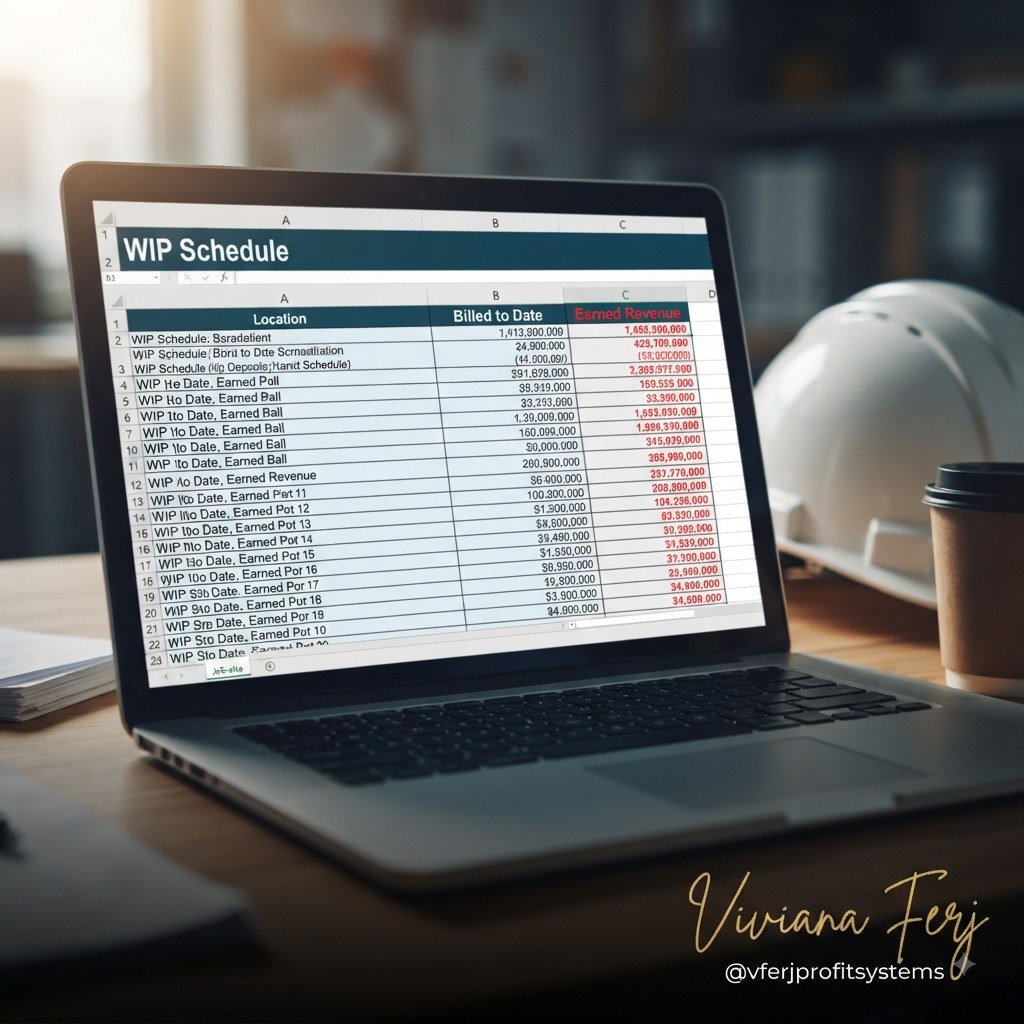
Under-Billing: The Cash Flow Trap
Under-billing happens when you bill less than you've earned. You've incurred costs and performed work, but you haven't billed the client for it yet. In accounting terms, it's an asset — money you're owed.
Under-billing is common in the later stages of a project, when change orders are pending or progress billing cycles lag behind actual progress. But sustained under-billing drains your working capital. You're paying for work out of pocket and waiting to be reimbursed — sometimes for months.
Under-billing also distorts your cash flow. Your bank account looks worse than it should, and you may miss opportunities to take on new work because you're waiting to get paid.

The Numerical Example: How It Shows Up in Your WIP
Suppose a $1,000,000 contract with estimated total costs of $850,000. The job is 50% complete — $425,000 in costs incurred.
Scenario 1 — Over-billing: The contractor has billed $600,000. Earned revenue is $500,000. Over-billing is $100,000 — a liability on the balance sheet.
Scenario 2 — Under-billing: The contractor has billed $380,000. Earned revenue is $500,000. Under-billing is $120,000 — an asset on the balance sheet.
Both scenarios are correct for a single month. But if the same job is over-billed for six months in a row, the contractor is living on borrowed money. And if a job is under-billed for six months, the contractor is financing the project out of pocket.
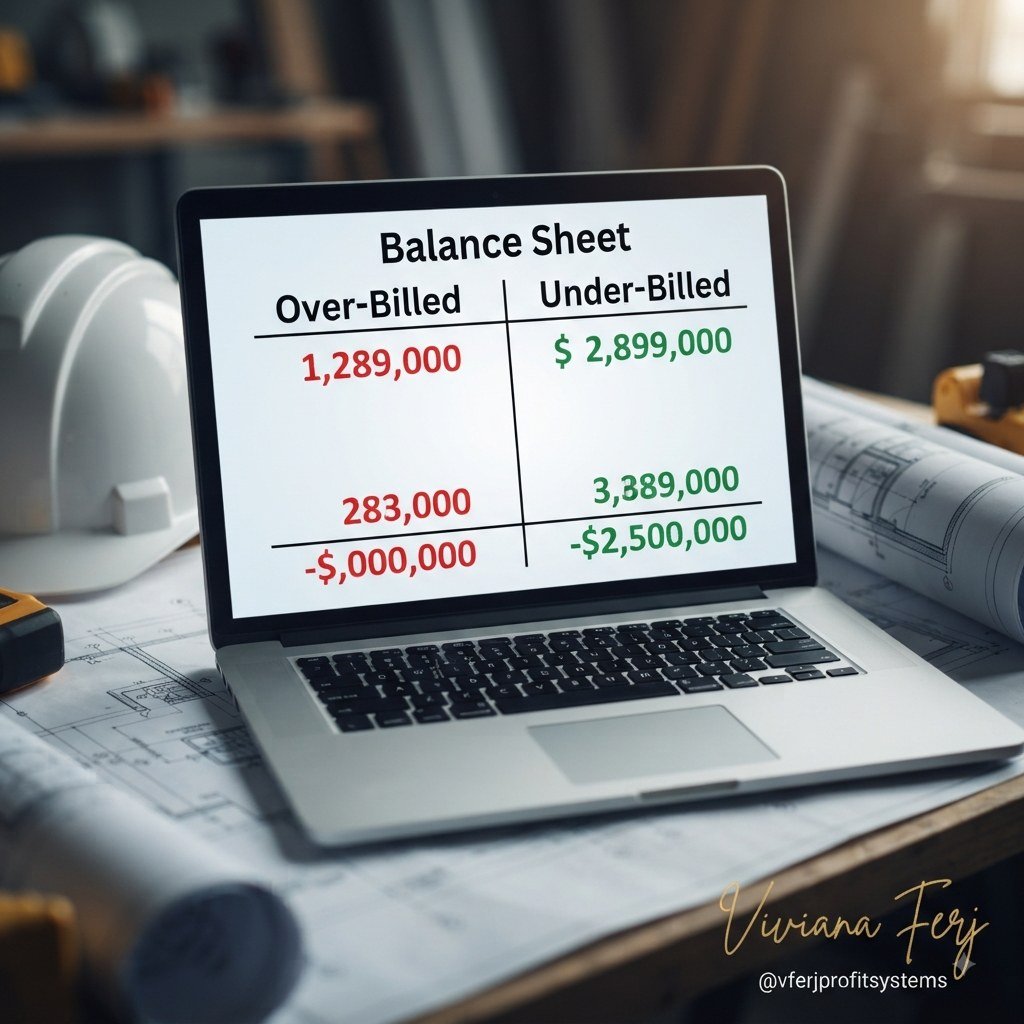
How Over/Under-Billing Affects Your Bonding Capacity
When a surety reviews your WIP Schedule, they look at your over/under-billing position. Consistent over-billing is a red flag — it suggests you're spending money before you've earned it, and if something goes wrong, you may not have the cash to complete the work.
Consistent under-billing is also a concern — it suggests you're not billing aggressively enough, which can strain your cash flow and reduce your capacity to take on new work. Sureties prefer a balanced position, where over-billing and under-billing are minor and temporary.
The Tax Implications
Under the percentage-of-completion method, taxable income is based on earned revenue, not billed revenue. If you're over-billed, you may have collected cash but deferred the tax liability. If you're under-billed, you may owe tax on revenue you haven't yet collected. In both cases, the timing difference between billing and earning affects your tax planning.

Frequently Asked Questions
What's a "normal" amount of over/under-billing?
A deviation of up to 10% of the contract value is generally considered normal, driven by timing. Beyond that, there's usually an underlying issue that needs attention.
Can a job be both over-billed and under-billed at the same time?
No. A job is either over-billed (a liability) or under-billed (an asset) — or perfectly balanced. It can't be both.
How often should I review over/under-billing positions?
Monthly, as part of your WIP Schedule review. Large or high-risk projects should be reviewed more frequently.
Does over-billing affect my taxes?
Not directly — taxes are based on earned revenue, not billed revenue. But the timing difference between billing and earning affects your cash flow and tax planning.
Take This to a Full Diagnostic of Your Operation
- Real profitability per job, not just company-wide
- WIP Schedule and detection of over/under-billing
- Tax provision and multi-state exposure
- Bonding capacity and subcontractor risk

Get These Insights Straight to Your Inbox
A new article on construction finance every month — no spam, unsubscribe anytime.